Direct naar inhoud
small4

Every child has the right to play. This is recognised in Article 31 of the United Nations Convention on the Rights of the Child, which affirms every child’s right to rest, leisure, and to engage in play and recreational activities appropriate to their age.

At Space for Play, this principle lies at the heart of our work. We are committed to creating meaningful opportunities for children to play — freely, safely, and joyfully — because play is not a luxury, but a fundamental right.

We believe that play is the foundation of a child’s learning. It complements the classroom experience and is essential for children to truly thrive — especially when it happens outdoors.

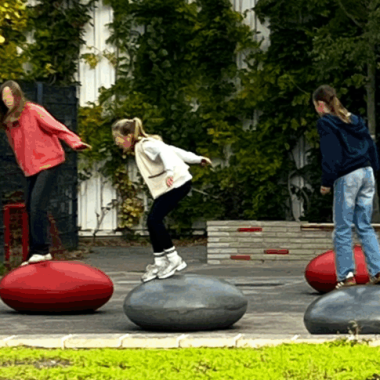
Through jumping, climbing, imaginative role-play, and engaging with nature, children develop physically, socially, emotionally, and cognitively. Natural play, in particular, encourages curiosity, resilience, and a deeper connection with the world around them.

At Space for Play, we integrate these principles into both our design approach and our process. We create spaces where children can be creative, social, and confident — and where learning happens naturally through play.

small 2
4 co maintain natureheroe

Play is still too often reduced to a cluster of equipment placed in a centralised, enclosed area. We believe it can — and should — be much more than that.

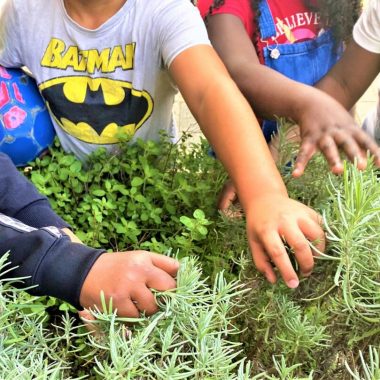
We believe in the power of learning through nature. While natural environments are not possible in every context, children have an innate desire to engage with the natural world. Creating safe yet challenging play spaces that nurture this connection is one of our core areas of expertise.

At Space for Play, we design for meaningful interaction with green spaces, integrating climate-adaptive solutions that benefit not only children, but the wider city. Our projects provide shade, support water management, enhance biodiversity, and contribute positively to the urban environment.

We embed these principles not only in our designs, but also in our “golden process” — fostering co-learning and shared maintenance to ensure that spaces continue to grow, adapt, and thrive with their communities.

Play spaces are often still fragmented. In many cases, boys tend to occupy the centre — frequently dominated by sports fields — while girls are pushed to the periphery. Across different contexts, schoolyards and playgrounds are too often designed around activities that primarily attract one group of users, limiting how others feel able to participate.

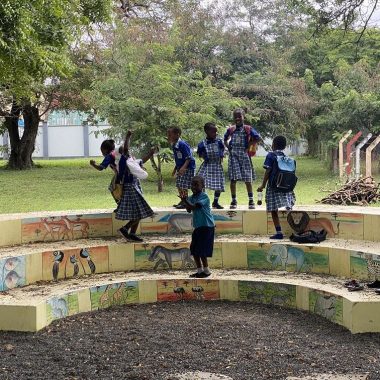
At Space for Play, we actively challenge this pattern. We believe play spaces should belong to all children — girls, boys, and children with disabilities alike.

We design diverse and inclusive environments that move beyond gendered assumptions. Instead of reinforcing separation, we create spaces that encourage interaction, cooperation, and shared experiences. Our goal is to foster environments where every child feels welcome, represented, and free to play in their own way.

162A2122
2012-12-19 kerst cairo 2012 023

We design for abilities. All children are different. Children with disabilities face many challenges in daily life. Play is extra important for these children, to have fun, to forget their disabilities by independently developing their skills in play.

We have expertise in designing for children with hearing or visual impairment, on the autistic spectrum, with Down syndrome, with physical disabilities, facing socio-emotional or behavioural challenges, children with learning difficulties, and for children with a wide range of physical disabilities.

We believe the play areas should be inclusive, accessible and fun for ALL children, so they can play together.